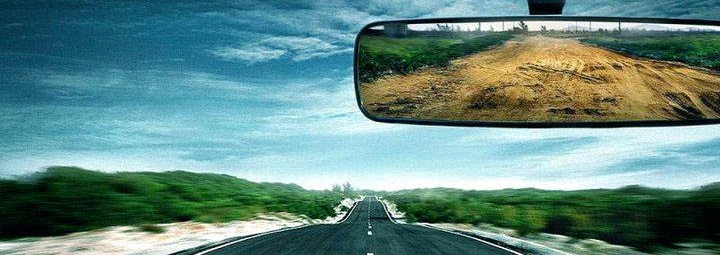
A Life Examined– Building on the Foot of Mount Vesuvius – Part 1
What would happen if we unearthed a Stealth fighter at the site of an ancient Mayan city? It would answer nothing, but it would question everything. As context for each other they would inherently become something quite new. Regardless of the power and magnificence each has as individual objects, and as confounding as their union may seem, the Mayan city could never again be seen as just an ancient city, and the Stealth fighter could never again be seen as just an advanced piece of military technology.
In terms of how we perceive ourselves and the world around us, context is everything, but only if we acknowledge that one has a complexly inter-related relationship towards the other. If we choose to acknowledge a broader purview of consideration for all things rather than our more narrow, isolated meanings, we inherently enter the world of risk; we risk upsetting the comfortable familiarity of our current perceptions. Seeing something new or different tends to challenge our assumptions, and thus always presents a risk that our assumptions may need to change. (fear of ambiguity?)
In terms of architecture, what would happen if we treated the architectural object as context and the landscape as object. In so doing, it would reverse the roles of each, assuming that the landscape now held the influencing pen of the writer while the architectural object played the more subservient role of the receiving page. The reversal would question many of our currently established rules and roles, the most startling of which would be the role of the architect.
The point of these initial examples is to illustrate the fact that relative to how we intelligently perceive ourselves and the world around us (if we wish to be intelligent about it), the power of open and unbiased inquisition is vitally important. More importantly, it questions whether our current notions of both ourselves and our built environment are durable, both in concept and in practice.
Understanding the increasingly complex set of relationships that exist between object and context, and a reaffirmed commitment to cultivating the power of scientific inquiry would be required to seek an understanding, is at the very heart of formal architecture and urban design discourse today. As we begin to better understand the complexities that are naturally and indelibly built into all relationships, we find that the challenges of building and designing in the 21st century are directly challenging many of our traditionally held assumptions we have about ourselves and the world around us. As a somewhat interesting, if not incumbent consequence, we even begin to question who we are, what we are, and how we fit into the natural order of things.
A Life Examined– Building on the Foot of Mount Vesuvius – Part 2
Socially, culturally, politically, and ecologically, we find ourselves today at a crossroads, a crossroads where we are rapidly realizing that many of our long-standing assumptions no longer fit our modern life. As we begin to grapple with new understandings of the natural world around us, often in blatant contradiction to our old understandings, we begin to realize that the questions are more important than the answers. It is a place we’ve been before, yet a place we’ve rejected in our current modern culture through our preference for easy convenience. It’s a place that immediately questions our unfortunate propensity towards defining our world in terms of opposing dualities and absolutes, all begat by a misplaced and prejudiced notion of human exceptionalism.
Our evolving story of the human experiment is one that follows a long, at times painfully slow journey of self discovery, always relative to our evolving knowledge and understanding of the world around us, and how we are to fit within. We now find that it is our evolved abilities for complex abstract thought that gives rise to our highly-defined and somewhat animated sense of fear; since we can envision a better tomorrow, we can likewise envision a worse tomorrow as well. Inscribed within this unique intelligence is the operative subroutine of duality. As duality manifests itself as the antecedent lens through which we perceive our world, we find fear to be a paradoxical duality itself, motivating while it also incapacitates.
As a behavioral manifestation of our fear, we tend to resist change and seek consistency, most often through attempts at control. But almost as a self-validation to our uniqueness, our highly nuanced and somewhat animated sense of fear, driven by our advanced intellectual capacity for abstract thought, signals an aspect of the human condition that is unique within nature. However, this uniqueness is not an evolutionary advantage, as it gives rise to behavioral concepts that are inherently despotic, and often corrosive. Much as we would like to believe that there are consistencies that would guarantee stability to the end, we are only beginning to accept that anything in the natural world that remains the same does not flourish, that the design of the natural world is one of constant and evolving flux, and that our fit within is but a moving finish line that is never obtained.
We are only just beginning to question what our lives would look like if duality were no longer an antecedent to every discussion – up/down, left/right, male/female, black/white, beginning/end. If dualistic definitives no longer define our concepts of existence, how do we see ourselves and the natural world around us? If our perception of the natural world is no longer restricted by these base prejudices of ‘either/or’, can the alternative found in a broad range of consideration begin to expand the possibilities of our experience? These are but a few of the questions we hope to investigate herein.
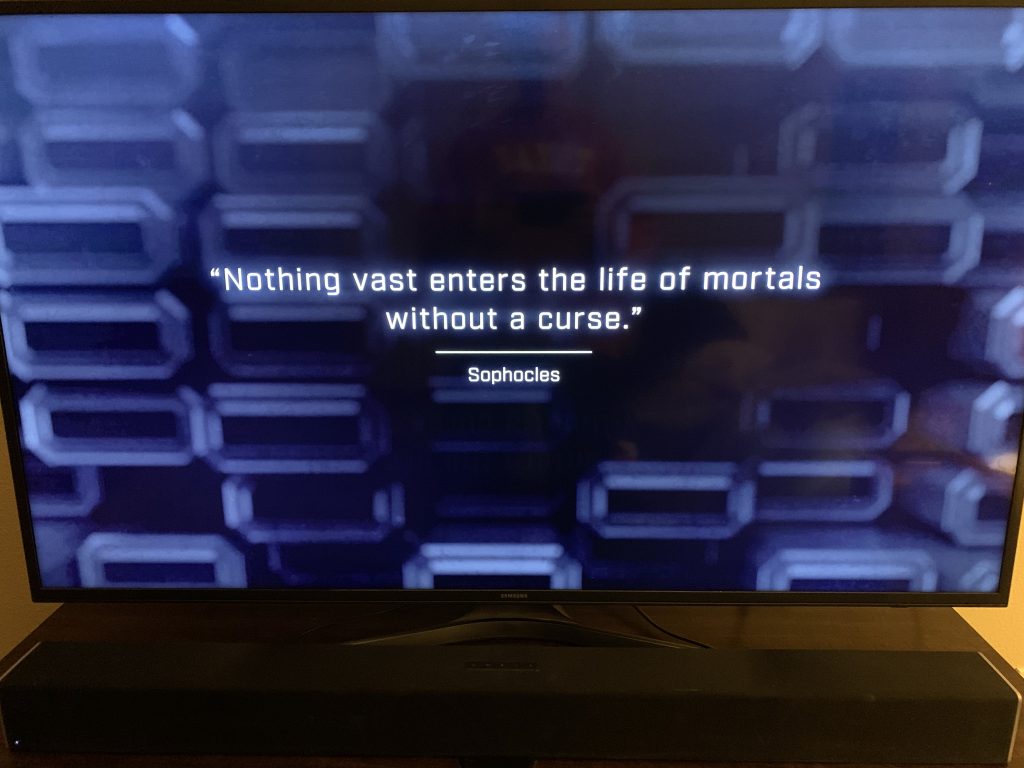
Life Examined– Building on the Foot of Mount Vesuvius – Part 3
Our path has traveled from low and humbled stations, where the struggle for daily survival consumed our every moment, to our current position of hubris, where our technologies have gained us the ability to alter our environment for our own comforts, concerns, and pleasures. As we begin to realize that our philosophical constructs, some of them centuries old, are in dire need of revision, we find that this revision requires far more than a simple adjustment in behavior. It requires a re-examination of the generative antecedents that drive some of our most fundamental beliefs, many of which have for centuries define the ontological nature of the human condition itself.
In that architecture and urban design so often reflect the values of the culture which creates them, we find that they can also reflect the journey taken. It is of little wonder, therefore, that architecture and urban design find themselves at the same crossroads that we find ourselves culturally.
As our modern sciences continually reveal, clarity of vision towards the outside world often involves a precursive look inwards, digging deep to excavate and expose root causations. Emerson reminds us that to know nature is to know ourselves, mirroring what has been surmised for ages that the natural world and the human condition are ontologically intertwined. Though a headwall that is barely breeched, it is only in recent times that our sciences have begun to provide empirical evidences that move towards verifying these assumptions. Though yet fully understood, we find a new horizon of hope and fascination in this intertwining, hoping to discover within a framework of consilience, rather than opposition, some new re-definition of our own existence.
The arrogance of human exceptionalism, a prejudice begat over 4,000 years ago, is somewhat excusable in pre-scientific times. But it’s persistence in our modern world, however, is somewhat inexcusable, revealing our stubborn refusal in accepting that we are but a newly-evolved species.
In placing our existence into proper perspective, we have only to compare our meager timeline with that of overall geologic time to see that human existence as a species is but a blip on the timeline itself. In comparing our existence to universal time, the register is almost invisible. Much as we wish to believe that we are the ultimate purpose driving the existence of the universe, this thesis is hardly quaint in light of what we know today.